Ceramic Window Tint in 2026: The Complete Guide to Heat Rejection, UV Protection, and Choosing the Right Film

If you have sat in a parked car in July, you already know the pain. The seat belt buckle burns your hand. The steering wheel is too hot to touch. And no matter how long you run the AC, the cabin still feels like an oven.
Ceramic window tint is not a new product. But in 2026, the technology has matured to the point where it is no longer just a premium upgrade. It is the standard for anyone who wants real heat rejection, UV protection, and long-term durability. Here is everything you need to know before you buy.
What Is Ceramic Window Tint, Exactly?
Ceramic window tint uses nano-ceramic particles embedded in the film layer. These particles are non-conductive and non-metallic, meaning they block infrared (IR) and ultraviolet (UV) light without interfering with radio, GPS, or cellular signals.
Unlike dyed or carbon tint, ceramic films do not fade or turn purple over time. The technology works by absorbing and dispersing heat rather than reflecting it, which gives you better overall cabin temperature control without the “mirror” look of metallic films.
Key Benefits at a Glance
- IR rejection: Premium ceramic films block 80-98% of infrared heat, keeping the cabin significantly cooler
- UV protection: Up to 99% UV rejection protects your skin and prevents interior fading and cracking
- Glare reduction: Less squinting into bright sunlight means safer driving
- Signal transparency: No interference with phone, radio, or toll pass signals
- Lifespan: Quality ceramic tints last 10+ years without color change or bubbling
Ceramic Tint vs. Other Window Films in 2026
The window film market has three main tiers. Here is how they compare.
Dyed Window Tint
The entry-level option. A layer of dye absorbs some heat and light. It is cheap, but it fades relatively quickly and offers minimal heat rejection. Best for temporary solutions or tight budgets.
Carbon Window Tint
A mid-tier upgrade. Carbon particles block more IR than dye and do not fade. Offers a matte finish. Decent heat rejection, but still not in the same league as ceramic films.
Ceramic Window Tint
The top tier. Nano-ceramic construction delivers maximum IR and UV rejection, zero signal interference, and a clear, non-reflective appearance. The upfront cost is higher, but the performance and lifespan justify the investment.
If you want an even deeper breakdown of cost and performance, check out our detailed ceramic tint vs. regular tint comparison.
How to Choose the Right Tint Level for Your Car
Tint level is measured by Visible Light Transmission (VLT) — the percentage of visible light that passes through the film. Lower VLT = darker tint = more heat and glare rejection.
Common VLT Percentages
- 5% (Limo Tint): Extremely dark. Maximum privacy and heat rejection. Illegal in most states for front windows
- 20%: Dark but still allows some visibility. Popular for rear windows
- 35%: A balanced option. Good heat rejection while maintaining visibility. Legal in many states for front windows
- 50%: Lighter tint. Subtle heat reduction and UV protection with minimal appearance change
- 70-80%: Nearly clear. Primarily for UV protection and slight heat reduction. Legal everywhere
Check your state laws before choosing. We have a full guide to car window tint percentages and legality to help you navigate the rules.
Installation: DIY vs. Professional
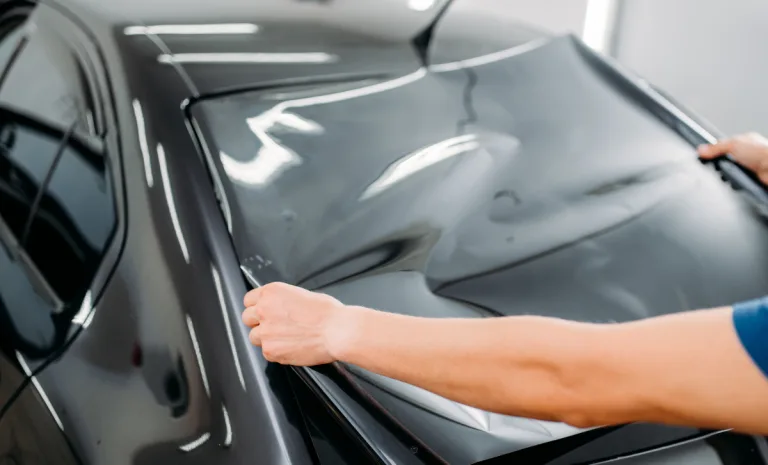
Ceramic window tint is not a beginner-friendly DIY project. The film is thicker than dyed or carbon tint, making it harder to shrink and shape to curved windows. Bubbles, creases, and premature peeling are common with amateur installation.
Professional installation typically costs $200-$600 for a full car, depending on the film brand and vehicle size. That price includes proper surface prep, precise cutting, and a warranty that covers peeling or bubbling.
If you are on a tight budget, you can buy pre-cut kits online and attempt the install yourself. Just know that the film itself is expensive, and mistakes mean starting over with a fresh roll.
Top Ceramic Tint Brands for 2026
Three brands consistently deliver verified performance in independent testing this year:
- XPEL XR Plus: Industry leader with 98% IR rejection and a lifetime warranty. Clear appearance with no haze. Widely available through authorized installers
- LLumar IRX: Excellent heat rejection at a slightly lower price point. Strong durability and scratch resistance. Trusted by professional shops for years
- 3M Crystalline: The most optically clear ceramic film. Over 97% IR rejection with a nearly invisible appearance. Premium pricing but proven long-term performance
Final Thoughts
Ceramic window tint is not a luxury add-on anymore. In 2026, it is the practical choice for anyone who parks in the sun, spends time on the road, or cares about keeping their car’s interior in good shape.
The upfront investment pays for itself in reduced AC load, longer-lasting upholstery, and a cabin that does not punish you every time you get in during summer.
Start with a professional consultation. Know your state’s VLT limits. Invest in a quality brand. Your car — and your skin — will thank you.
Want more car care and protection advice? Browse our Pro Detailing guides for expert tips on keeping your vehicle in top shape year-round.