How to Clean Leather Car Seats Without Damaging Them

Leather seats make people nervous, and I get it — one wrong product and you’re looking at discoloration or cracking that doesn’t buff out. But learning how to clean leather car seats safely is mostly about restraint: the right cleaner, gentle agitation, and not much water. In the shop, leather interiors were routine work, and the jobs that went wrong were almost always caused by someone reaching for whatever was under the sink.
Here’s the method that keeps leather clean without shortening its life.
Know What Leather You’re Dealing With
Not all automotive leather is the same, and the type determines how careful you need to be.
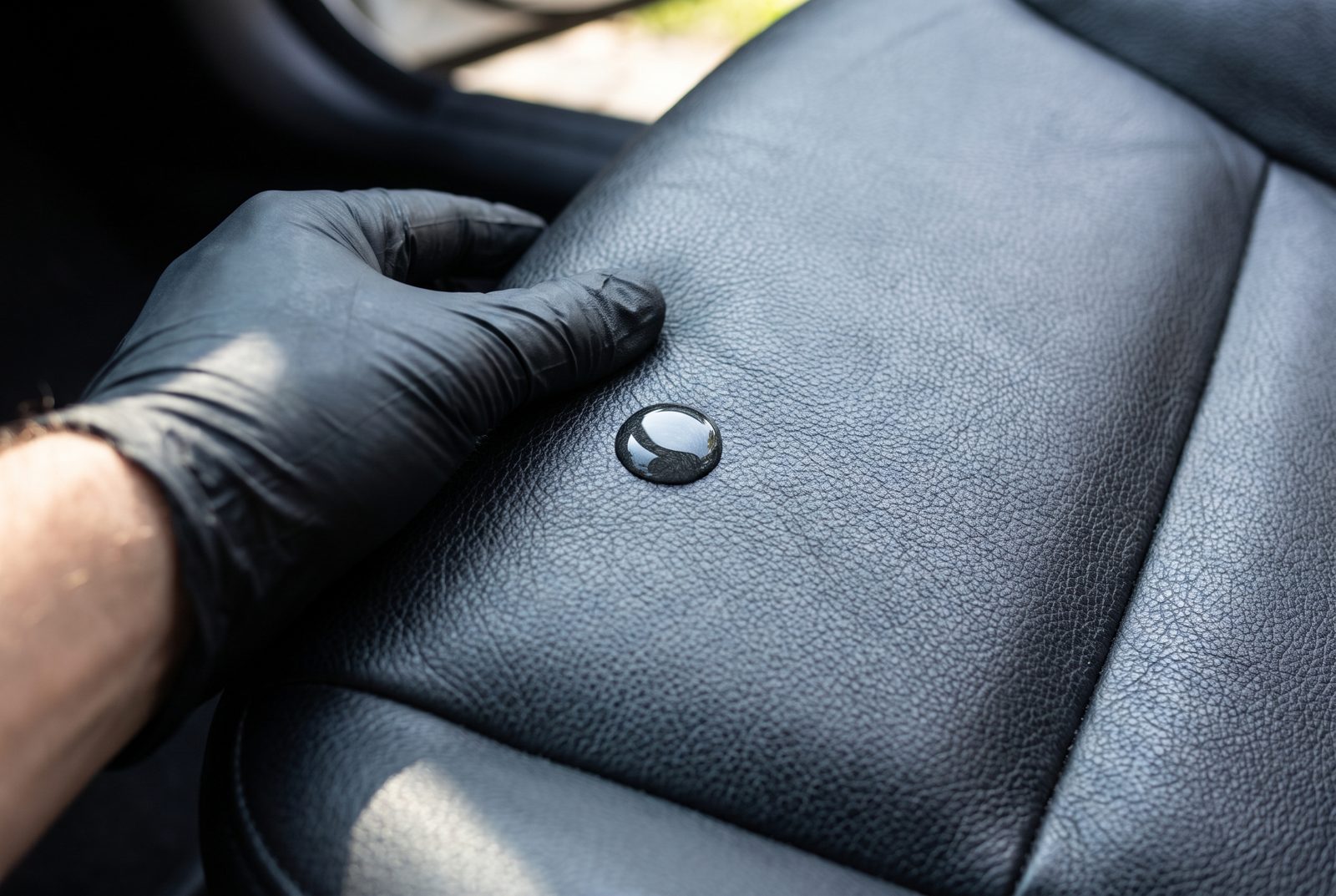
Coated leather is what you’ll find in most modern cars. The hide has a pigment layer and a protective clearcoat on top — essentially a painted surface. It’s the most forgiving type: resistant to stains, tolerant of mild cleaners, and what most “leather cleaner” products are designed for. Water beads on it rather than soaking in.
Aniline and semi-aniline leather show up in higher-end vehicles. These have little or no protective coating, so the surface is more natural — and more vulnerable. They absorb liquids, stain more easily, and demand the gentlest products and the least moisture.
The water drop test: put a single drop of water on an inconspicuous spot. If it beads up and sits on the surface, you’ve got coated leather. If it slowly absorbs and darkens the spot, you’re dealing with aniline or semi-aniline — proceed with extra care, minimal product, and test everything first.
Perforated leather deserves a warning regardless of type: those tiny holes go straight through to the foam underneath. Too much liquid seeps in, and you’re inviting mildew and delamination. Keep perforated seats nearly dry — damp towel, not wet.
What You’ll Need
- Vacuum with a crevice tool and soft brush attachment
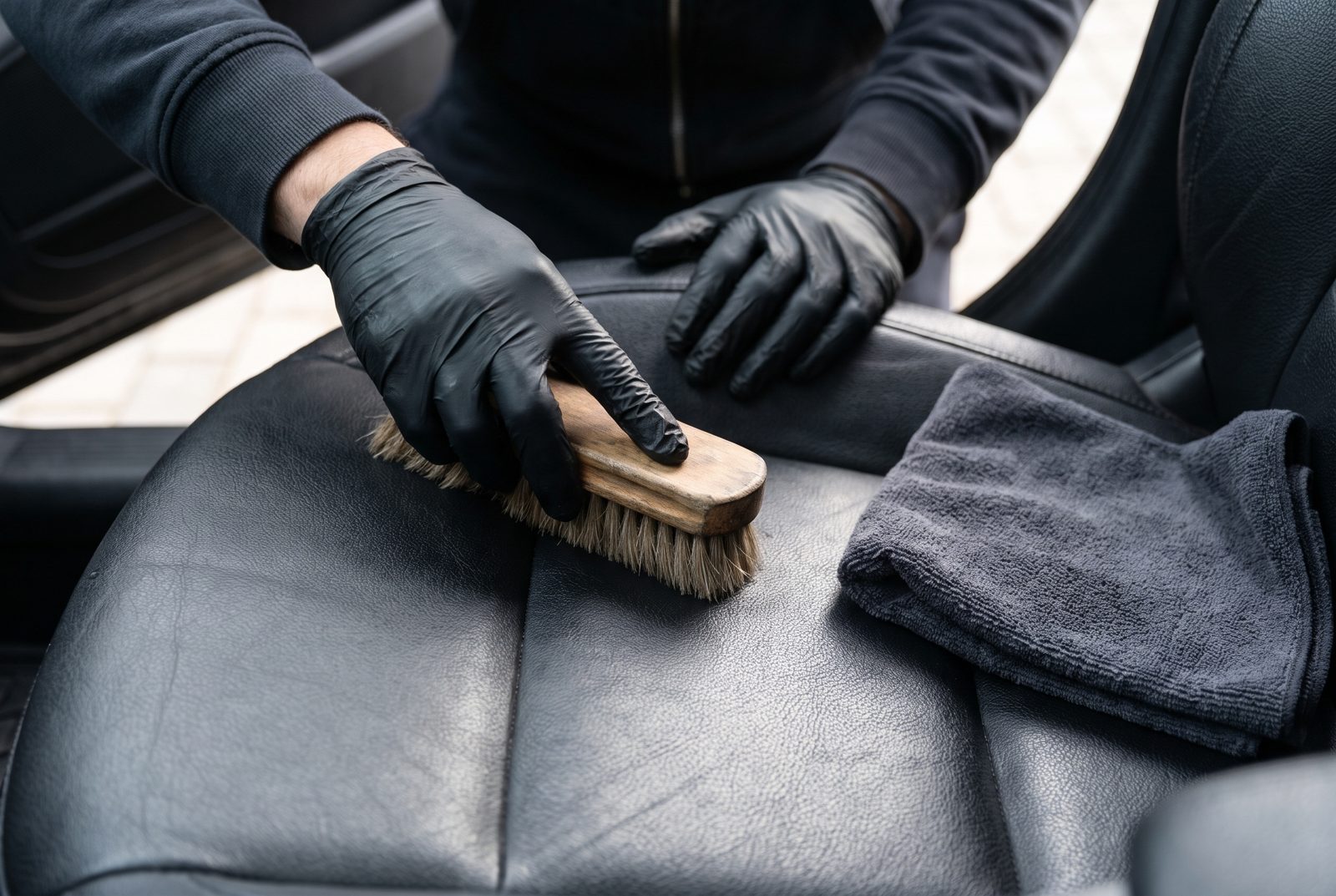
- Soft-bristle leather brush or horsehair detailing brush
- pH-neutral leather cleaner
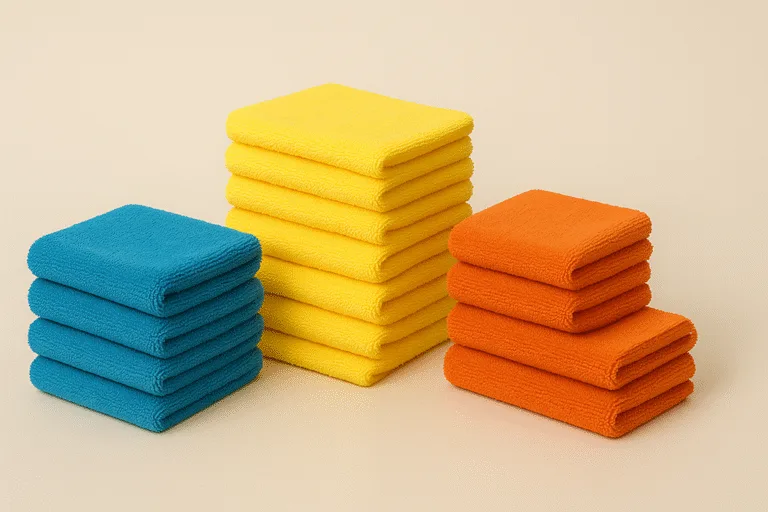
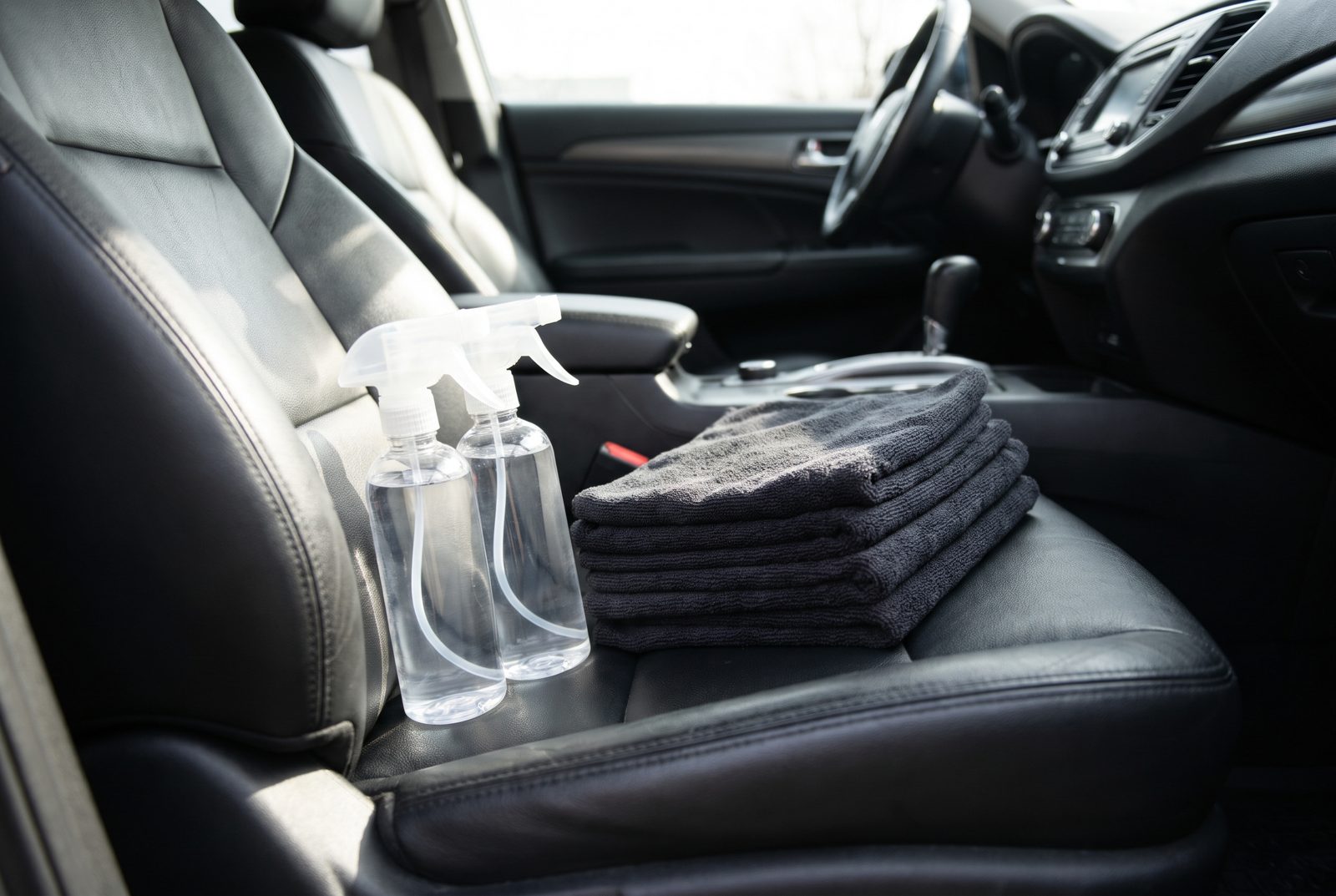
- Several clean microfiber towels (separate ones for cleaning and for drying)
- Leather conditioner
- Optional: a soft detailing brush for seams and perforations
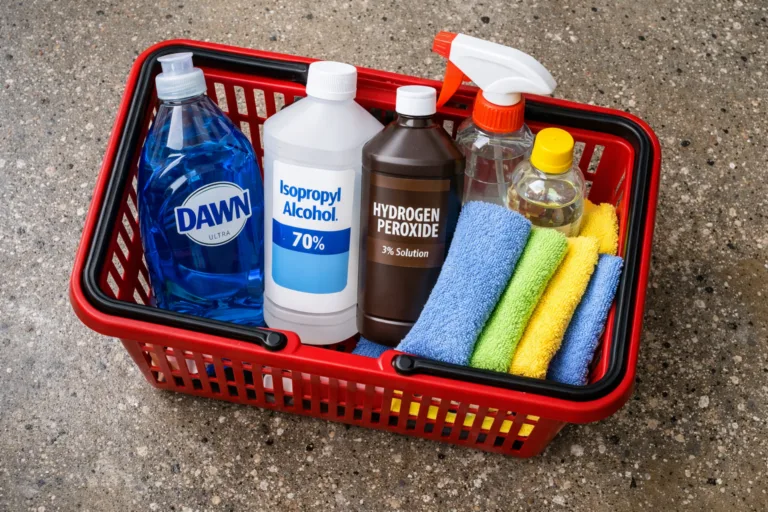
The pH-neutral part matters. Leather has a slightly acidic natural pH, and harsh alkaline cleaners — all-purpose cleaners at full strength, dish soap, household sprays — strip the leather’s natural oils and damage the protective coating. A dedicated leather cleaner costs little and removes the biggest risk from the whole job.
How to Clean Leather Car Seats, Step by Step
- Vacuum thoroughly. Get into the seams, the seat-back pockets, and where the seat meets the backrest. Grit left on the surface becomes sandpaper the moment you start wiping.
- Dry-brush the surface. A soft brush loosens dust and body oils from the grain before any liquid touches it. Work in small sections.
- Apply cleaner to your towel or brush — not directly on the seat. Spraying directly on the leather floods perforations and seams with liquid. Mist it onto your applicator instead.
- Agitate gently in small sections. Light pressure, overlapping passes, following the grain. You’re lifting dirt out of the texture, not scrubbing a stain out of carpet. Let the chemistry do the work.
- Wipe with a clean, lightly damp microfiber. A separate towel, wrung out well, picks up the lifted dirt and cleaner residue. Flip to a clean side often.
- Dry the section. A quick pass with a dry microfiber removes remaining moisture. Don’t let seats air-dry soaking wet, and don’t park the car in direct sun to “speed things up” — heat bakes in residue.
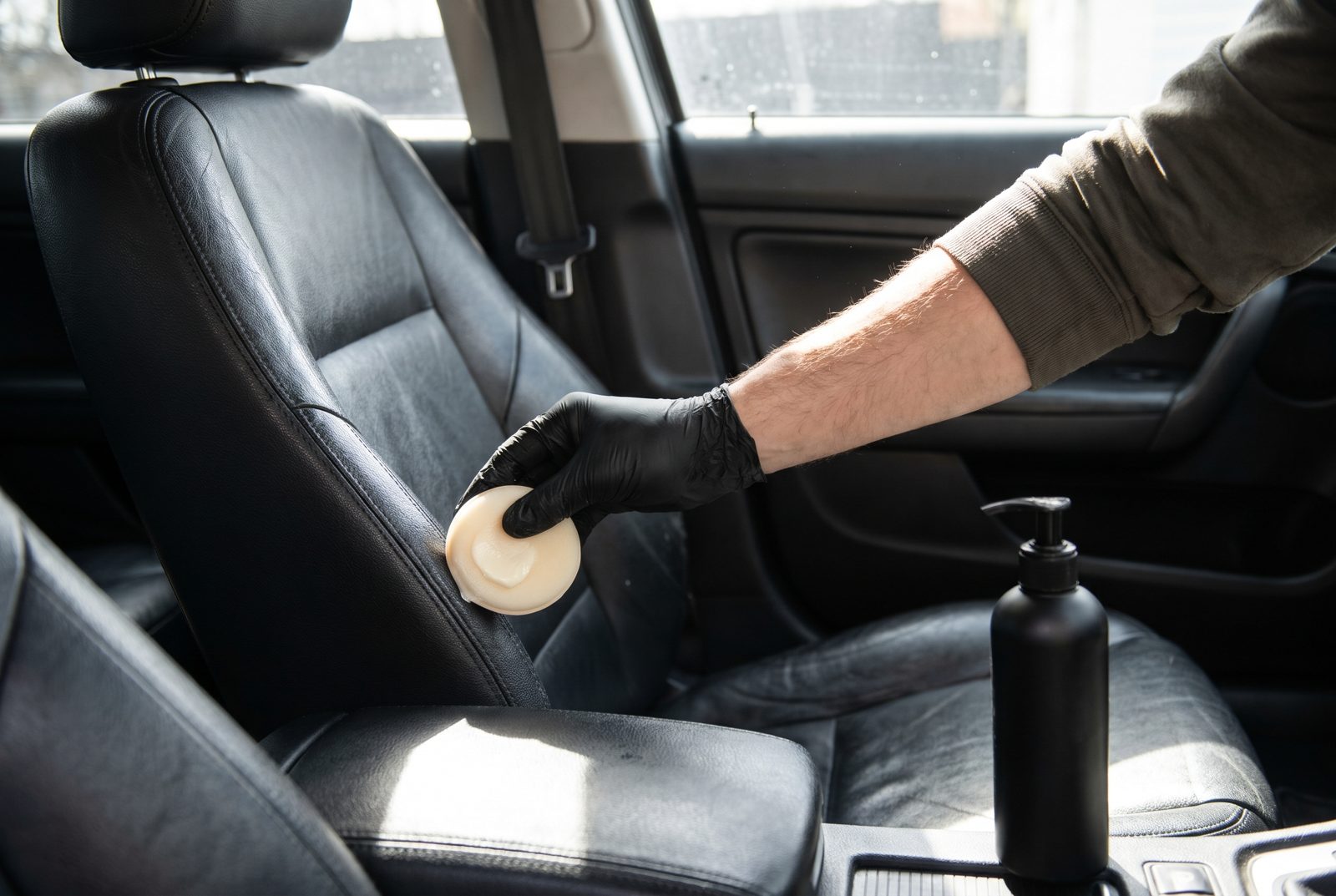
- Condition once the leather is clean and dry. Apply a thin, even coat of conditioner with a foam applicator or microfiber, let it dwell per the product directions, then buff off the excess.
Don’t Skip the Conditioner
Cleaning removes dirt, but it also removes some of the oils that keep leather supple — even on coated leather, where the conditioner mainly protects and nourishes the topcoat. Conditioning every few months keeps the surface flexible and adds UV resistance, which is what prevents the drying and cracking people blame on age. Thin coats beat thick ones: excess conditioner just sits on the surface feeling greasy and attracting dust.
Common Mistakes
- Using all-purpose cleaner at full strength. APC has its place in detailing, but undiluted on leather it strips oils and attacks the coating. If you must use APC, dilute it heavily — and a dedicated leather cleaner is still the safer choice.
- Too much water. Soaked seats, especially perforated ones, trap moisture in the foam. Damp tools, not wet ones.
- Scrubbing with stiff brushes. Aggressive brushing wears through the coating on coated leather and scuffs aniline leather. If a spot isn’t lifting with gentle agitation, it needs a second light pass, not more force.
- Cleaning in direct sun or on hot seats. Heat makes cleaners dry too fast, leaving residue and streaks baked into the grain. Work in the shade or a garage.
- Silicone-heavy dressings for a “wet look.” They look shiny for a day, attract dust, make the seat slippery, and do nothing for the leather itself. A clean matte or satin finish is the goal.
- Skipping the conditioner. Clean-but-unconditioned leather dries out faster than leather you never touched. Always finish the job.
FAQ
How often should I clean and condition leather seats? A light cleaning every month or two for a daily driver, with conditioning two to four times a year. Garage-kept cars that see little use can go longer between sessions.
Can I use baby wipes on leather seats? I’d skip them. Baby wipes contain fragrances, preservatives, and moisturizers meant for skin, not leather — they leave residue and don’t actually clean the grain. A proper leather cleaner isn’t much more effort.
My leather is already cracked — will cleaning fix it? No. Cracks are physical damage to the hide or coating, and no cleaner or conditioner reverses them. Cleaning still helps by removing the dirt ground into the cracks, and conditioning can keep it from getting worse — but set expectations honestly.
Are steam cleaners safe on leather? Use caution. Steam is effective but it’s heat plus moisture, which is exactly the combination that damages leather when overdone. If you use one, keep it moving, keep it brief, and condition afterward. For most DIY jobs, manual cleaning is safer.