How to Deep Clean Cloth Car Seats

Vacuuming keeps cloth seats looking okay, but it doesn’t actually clean them. Body oils, sweat, spilled coffee, and ground-in dirt work their way deep into the fibers and the foam underneath, and once they’re in there, no amount of surface vacuuming pulls them out. That’s when seats start looking permanently dingy and smelling faintly off no matter what you do.
Learning how to clean cloth car seats properly — a real deep clean, not a wipe-down — fixes most of that. The process is straightforward: vacuum thoroughly, agitate, treat stains in the right order, extract the dirt, and dry completely. Here’s the full method.
What You’ll Need
- Vacuum with an upholstery nozzle and crevice tool
- Stiff upholstery brush (not a wire brush — you want firm nylon bristles)
- Carpet/upholstery cleaner or a dedicated fabric cleaner
- Spray bottle, if your cleaner doesn’t come in one
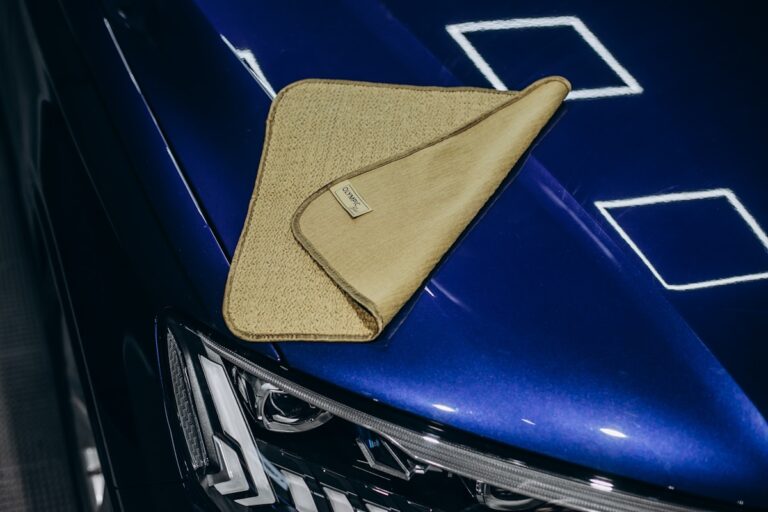
- Clean microfiber towels for blotting
- A compact carpet extractor, if you have one (helpful, not required)
- Fan or the car’s ventilation for drying
Step 1: Vacuum Like You Mean It
Remove the headrests if they come out — dirt hides underneath them. Then vacuum every surface of the seat: the seating surface, the backrest front and back, the sides, and the seams. Push the crevice tool deep into every seam and fold; that’s where crumbs and grit collect.
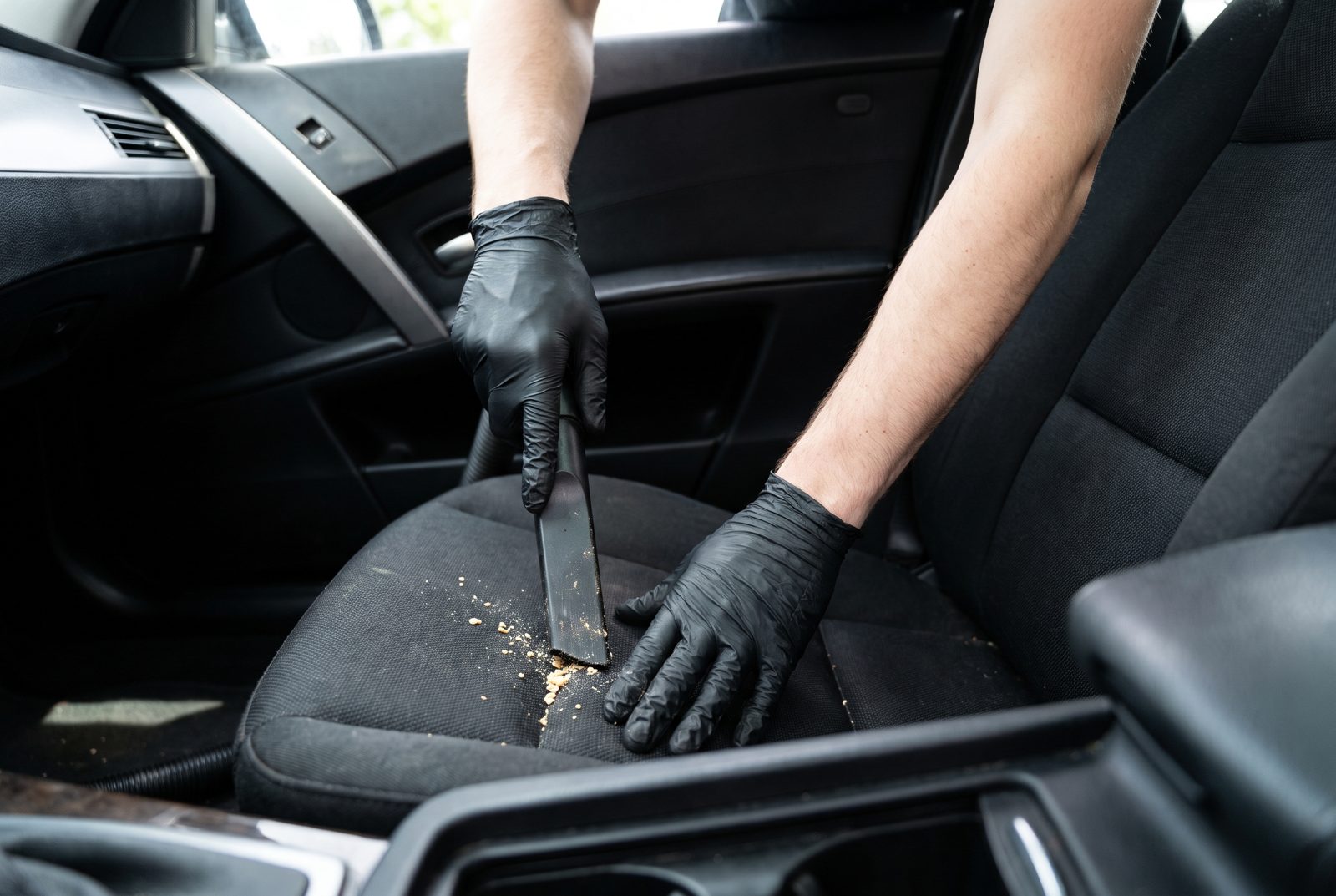
Go over each seat twice, in different directions. The second pass always pulls up more than you’d expect. If the seats have removable covers or adjustable sections, move them around and vacuum what gets exposed.
Step 2: Brush Agitation
Before any liquid touches the seats, hit them with the stiff brush. Dry agitation loosens embedded dirt and lifts matted fibers so the cleaner can actually reach the soil. Brush in overlapping passes, and you’ll see the fabric start to look better before you’ve sprayed a thing.
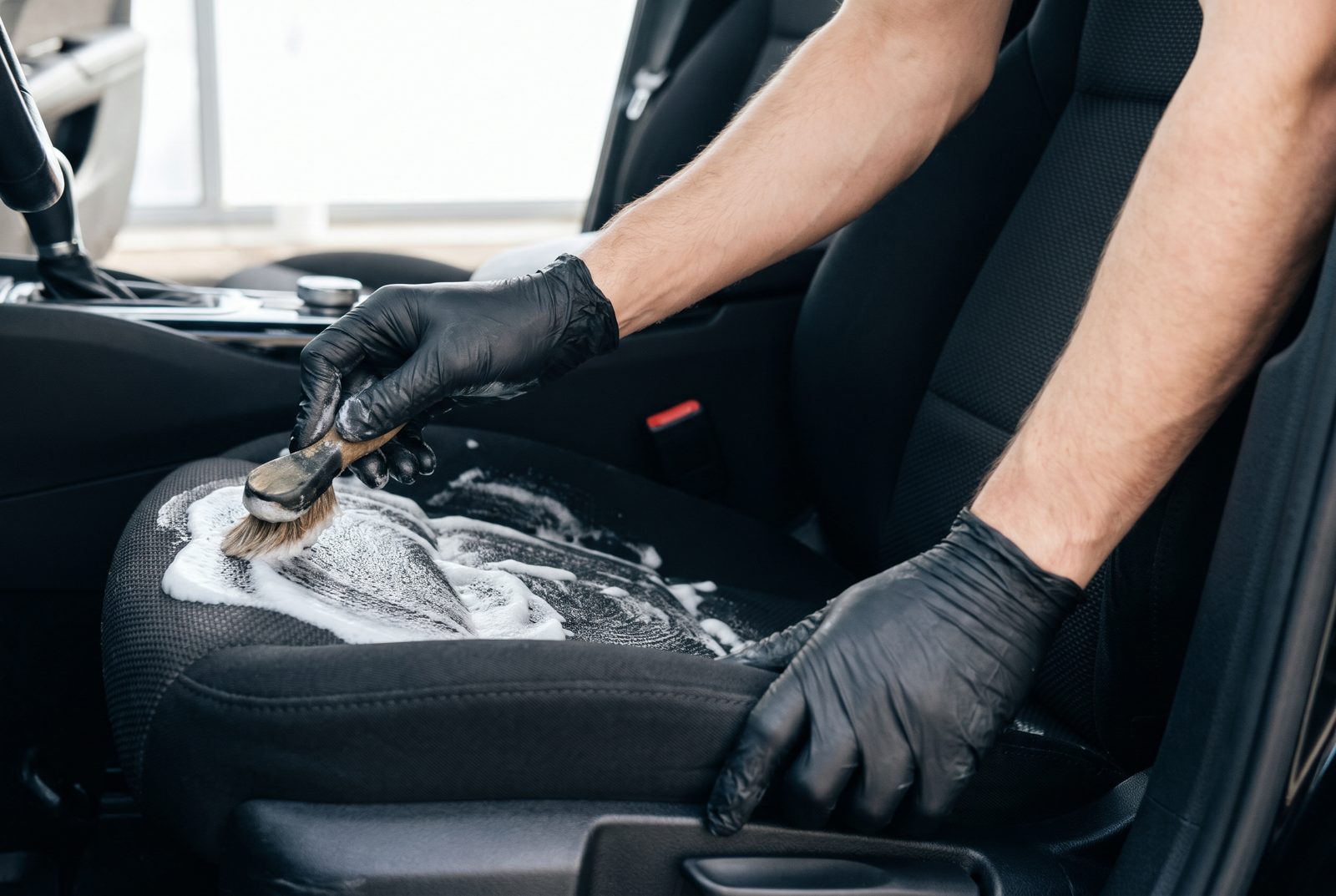
Vacuum once more after brushing. This two-stage dry prep — vacuum, brush, vacuum — is the part most people skip, and it’s the reason their “deep clean” underperforms.
Step 3: Pre-Treat Stains in the Right Order
Not all stains are equal, and the order you treat them matters. Work from the mildest approach upward:
- Blot fresh spills immediately. Press, don’t rub — rubbing spreads the stain and pushes it deeper.
- Vacuum up anything dry and crusty before wetting it.
- Start with the gentlest cleaner on the stain. Give it a few minutes of dwell time, then agitate lightly with the brush.
- Blot the stain out with a clean microfiber towel, checking the towel to see what’s transferring.
- Repeat rather than escalate. Two gentle passes beat one aggressive one. Only step up to a stronger cleaner if the stain isn’t moving.
Work from the outside of a stain inward. Starting in the middle pushes the stain outward and makes it bigger.
How to Clean Cloth Car Seats: Extractor vs. Spray-and-Blot
Spot-treating stains isn’t enough; the whole seat needs an even cleaning pass, or you’ll end up with clean spots surrounded by dingy fabric.
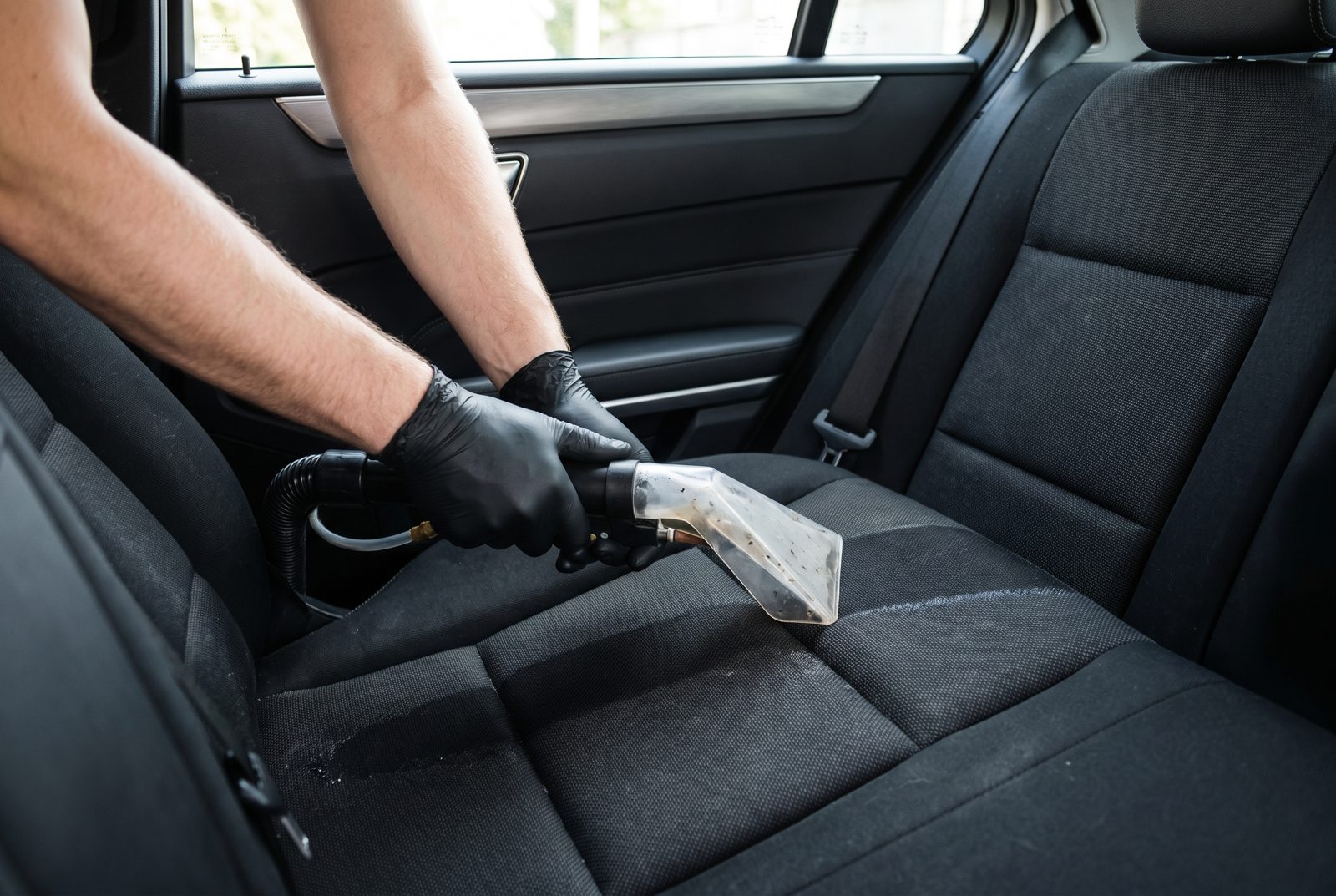
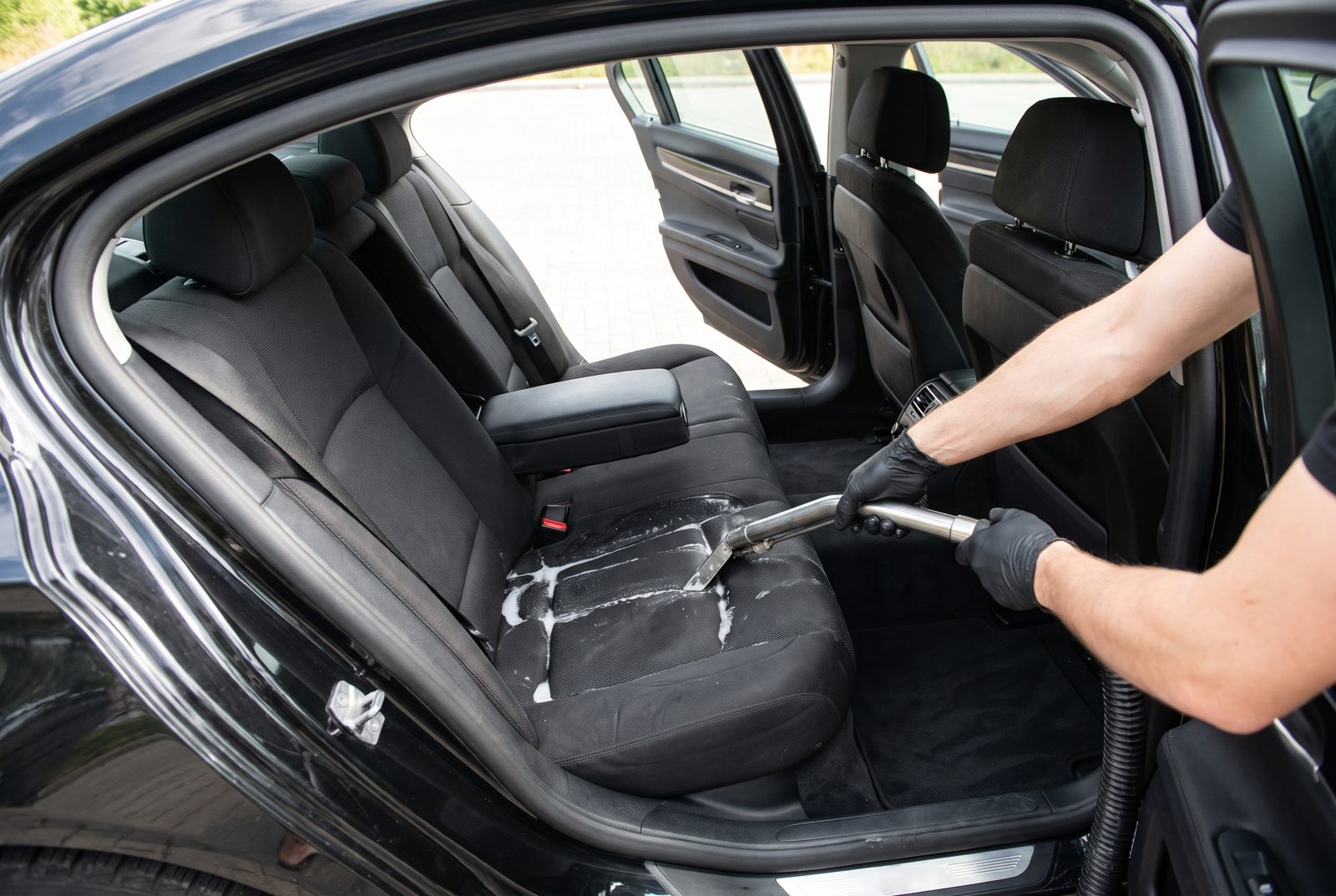
If you have an extractor: spray the upholstery cleaner evenly over one section at a time, agitate with the brush, then make slow extraction passes. Overlap each pass slightly. Don’t flood the seat — you want the fabric damp, not saturated. Empty and refill the extractor’s tank as needed; dirty water going back onto the seat defeats the purpose.
If you don’t (spray-and-blot): spray the cleaner onto one section, agitate with the brush, then press a clean, dry microfiber towel firmly into the fabric to blot the dirt and cleaner back out. Flip or swap towels as they soil. It takes longer than extraction, but with good agitation the results are close.
Either way, work in sections and keep your pressure even. Uneven application is how you get a patchy finish.
Step 5: Dry Completely
This step is non-negotiable. Cloth seats that stay damp grow mildew, and mildew means tearing the seats apart or living with the smell.
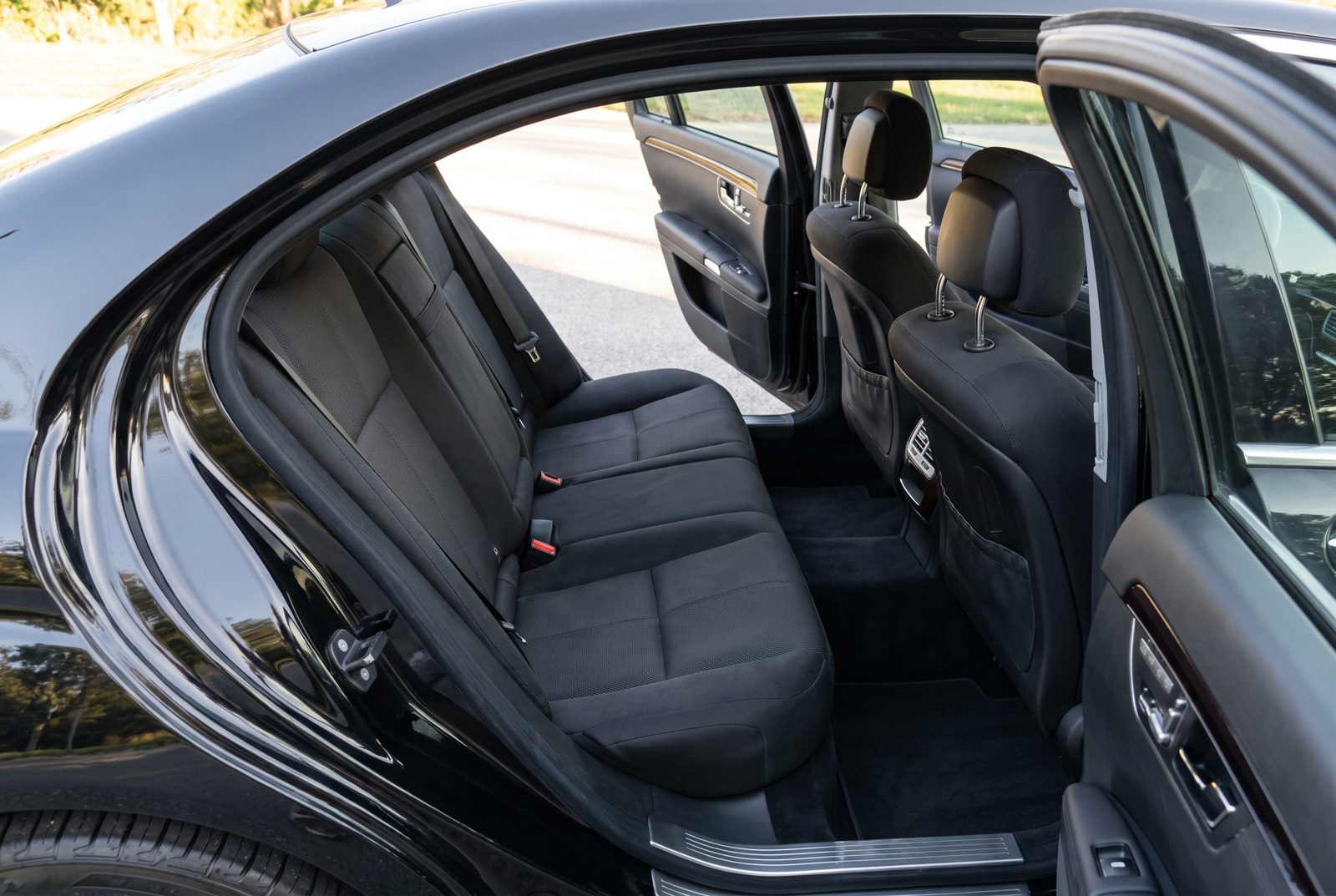
After cleaning, press dry towels into the seats to pull out as much moisture as possible. Then get airflow on them: point a fan at the seats, or run the car with the heat and fan on high and the windows cracked. In good conditions, seats dry in a few hours. In humidity, it can take most of a day. Don’t close the car up and walk away from damp seats — that’s exactly how mildew starts.
The seats should feel completely dry to the touch, including down in the seams, before you call it done.
When a Stain Is Beyond DIY
Most stains come out with patience. Some don’t, and knowing the difference saves you from making things worse:
- Bleach or dye damage. If the color is gone from the fabric, no cleaner brings it back. That’s a reupholstery or seat-cover situation.
- Dye transfer set by heat. Ink or dye that’s been baked in by a hot summer can bond permanently to synthetic fibers.
- Mold deep in the foam. Surface mold on fabric is treatable. If the foam underneath is compromised and the smell keeps coming back after cleaning, the seat needs professional attention.
- Burns. Cigarette or ember burns are physical damage, not stains. Cleaning won’t fix them.
If you’ve made two or three proper passes at a stain with no improvement, stop. Further attempts usually just spread it or damage the fabric.
Common Mistakes
- Soaking the seats. The number one DIY error. Damp cleans; soaked mildews.
- Rubbing stains. Rubbing spreads the stain and can damage fabric fibers. Blot, always.
- Using too much cleaner. Excess product stays in the fibers, attracts dirt faster, and can leave residue. Less is more.
- Cleaning in direct sun. Cleaner dries on the fabric before you can extract it, leaving residue and uneven results.
- Skipping the dry prep. Spraying cleaner onto un-vacuumed seats just makes mud.
FAQ
Can I use a carpet cleaner machine on car seats? Yes — a compact carpet extractor with an upholstery attachment works well on cloth seats. Use an automotive upholstery cleaner rather than household carpet shampoo, and don’t over-wet.
Will cleaning cloth seats remove the smell of smoke? It helps significantly, but smoke penetrates foam and headliners too. Deep-clean the seats, then address the headliner, carpets, and cabin air filter for the full job.
How often should I deep clean cloth seats? Once or twice a year for a daily driver is plenty, with regular vacuuming in between. If you have kids, pets, or a commute that involves eating in the car, lean toward twice.
Is it safe to use a steam cleaner on cloth seats? Steam works well for sanitizing and loosening grime, but keep the steam moving and don’t saturate the fabric. Follow up with blotting and thorough drying, same as any wet method.